
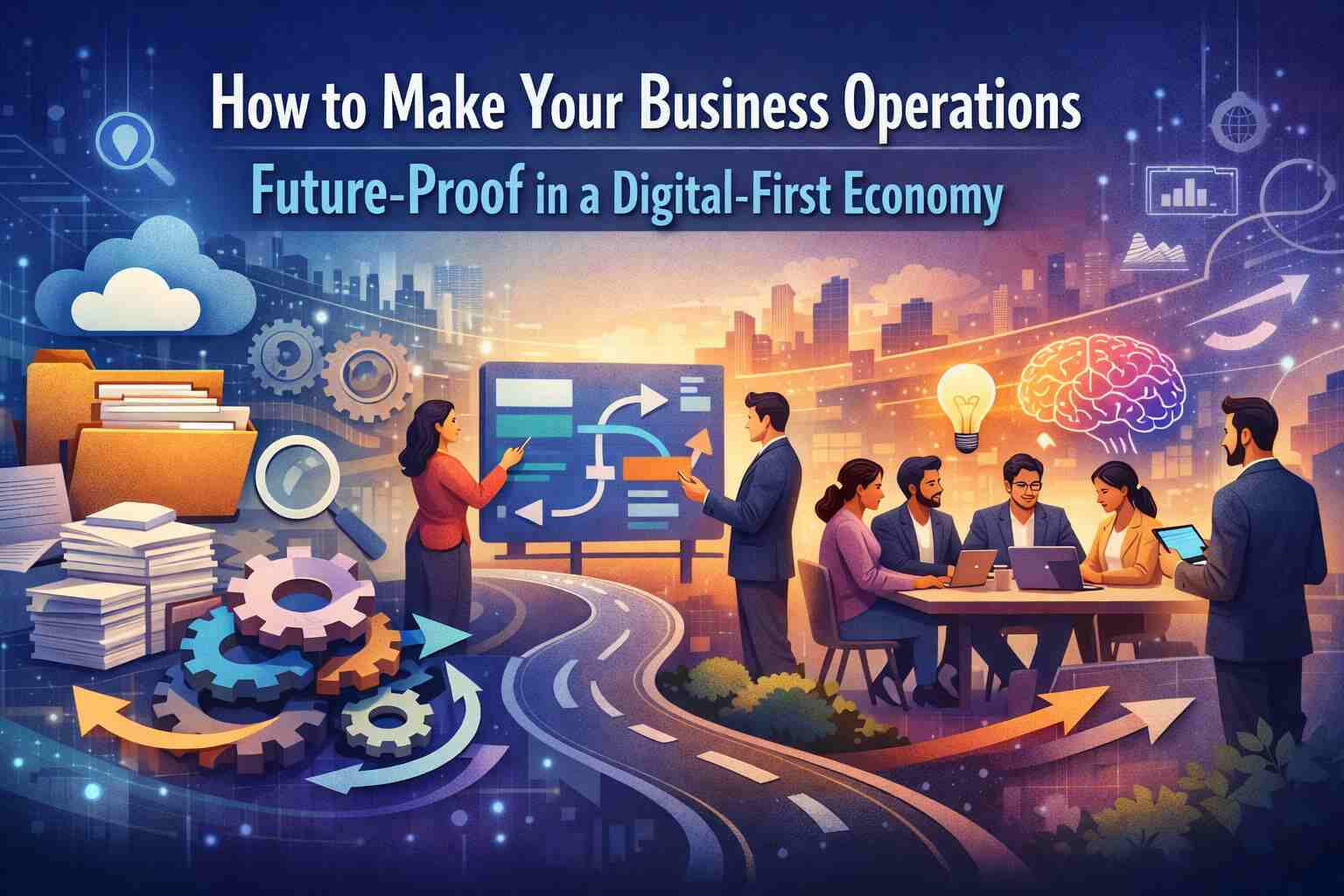
How to Make Your Business Operations Future-Proof in a Digital-First Economy
You are working hard for your business, but the results are not satisfactory. You realized things have changed again. The tools you used last year already feel outdated, your customers expect faster responses, and your team is juggling too many disconnected systems. It is not dramatic, it is just constant.
This is what a digital-first economy feels like. And somewhere in between all this, you start asking yourself, how do you keep your business steady when everything else keeps shifting? We have all been there, trying to catch up instead of getting ahead. The truth is, future-proofing is not about predicting everything; it is about building something flexible enough to survive change.
The Steps to Make Your Business Operations Future-Proof in a Digital-First Economy
- Change the Way of Document Management
You know the feeling when a file is somewhere, but no one knows exactly where. It is in emails, shared drives, someone’s desktop, maybe even printed somewhere. It slows everything down. This is where things start breaking quietly.
When you bring in a system like document management software, things don’t magically become perfect overnight, but they start making sense. You find what you need faster, your team wastes less time asking around, and suddenly decisions don’t feel delayed. It’s not about storage, it’s about clarity.
- Let Go of Rigid Processes
There is always that one process that everyone follows, even though no one likes it. It is slow, outdated, and no one remembers why it exists anymore. In a digital-first world, rigid systems don’t last long. You begin to replace them with workflows that can adapt.
Not everything needs to be fixed forever. Some things just need to work for now and evolve later. When you allow that flexibility, your business stops resisting change and starts moving with it.
- Build Systems That Think with You
At some point, you realize information alone is not enough. You need context. You need something that helps your team not just store knowledge, but actually use it.
That’s where a knowledge management system starts changing how work feels. Instead of repeating the same questions, your team starts building on what already exists. It is like creating a shared brain, a messy one at first, but it grows smarter over time. And you notice fewer mistakes, quicker onboarding, and better conversations.
- Focus on People, Not Just Tools
It’s easy to think the solution is always another tool. Another platform, another subscription, another dashboard. But tools don’t fix confusion—people do. You start paying attention to how your team actually works. Where they get stuck, what they avoid, what frustrates them. And then you adjust around that. The tech becomes support, not the center. That shift makes a bigger difference than most people expect.
- Stay Ready, Not Perfect
There is this idea that you need to get everything right before moving forward. But in reality, nothing stays “right” for long. So instead of chasing perfection, you start building readiness.
Your systems are good enough, your team knows how to adapt, and when something changes, you don’t panic; you adjust. It is not smooth every time, but it is manageable. And that is what future-proofing really looks like.
In the end, future-proofing is not a one-time project. It is a way of operating. It is messy, ongoing, and sometimes uncomfortable. But once you are in it, you realize you are not just reacting anymore; you are building something that can last.



Leave a Reply