
What Really Happens Inside Your Home in the Hours After a Pipe Bursts
A burst pipe catches most homeowners completely off guard. One moment everything is normal and the next there is water moving through spaces where it absolutely should not be. The immediate instinct is to panic, and honestly that instinct is understandable. But what you do in the minutes and hours that follow makes a significant difference in how this story ends. The choices made in that early window shape everything about how much damage occurs, how much material is saved, and how long the recovery actually takes.
The Window That Changes Everything
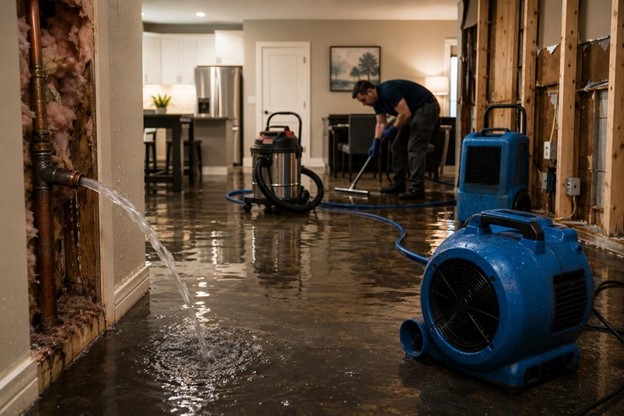
After the water supply is shut off and the immediate flow stops, there is a brief period where the damage can still be significantly limited by fast action. Standing water needs to come out as quickly as possible. Furniture and personal belongings in the affected area should be moved to dry ground. Closet and cabinet doors in the affected zone should be opened to allow airflow. These first steps do not replace professional help, but they prepare the environment for what comes next and reduce the absorption that happens while waiting for assistance to arrive. Professional emergency water removal uses industrial-grade equipment to extract moisture from materials that household vacuums and towels cannot meaningfully address. Getting that equipment working early is the most important decision in the early stage of recovery.
How Water Travels to Places You Never Thought to Check
The water you can see is only part of the story after a burst pipe. Water follows gravity and the path of least resistance, which means it gets into spaces that seem completely unrelated to where the pipe actually failed. It travels down interior wall cavities. It gets between floor levels. It saturates subfloor material beneath finished flooring. It moves along pipes and wires to reach areas that are surprisingly far from the source. This is why surface-level drying is never sufficient. A home that looks dry after a few days of open windows and household fans may still have significant moisture trapped inside walls, under floors, and in other enclosed spaces where it is actively breaking down the surrounding materials.
When Moisture Becomes a Health Concern
Moisture that stays trapped inside a home structure long enough creates conditions where biological growth becomes a real possibility. What starts as a plumbing emergency can develop a secondary problem that affects air quality and the health of the people living in the home. This is not a theoretical concern. It is something that happens regularly when water events are not fully addressed from beginning to end. Expert mold remediation after a significant pipe failure is not always necessary but is always worth evaluating, particularly if any drying was delayed or if the affected area was large enough that some portions may not have been fully reached. An honest assessment from a qualified professional is the only reliable way to know for certain.
A Final Word on Being Prepared Before the Crisis Hits
Nobody plans for a burst pipe. But knowing where your main water shut-off is before it ever becomes relevant can save significant damage in the early minutes of an emergency. Knowing which plumber or restoration team you would call takes one decision off the table during a moment when everything feels chaotic. Checking exposed pipes in unheated spaces before winter arrives, and addressing any that show signs of stress or corrosion, reduces the chances of the event happening in the first place. Preparation is not about expecting the worst. It is about reducing the impact if the worst happens to arrive anyway.



Leave a Reply